Loading...
Relief Valves at Stra-Val
Stra-Val
21 Columbus Avenue
Garfield, NJ 07026
show map
Visa, MasterCard, Amex accepted
(973) 340-9955 (973) 340-9933
Contact Us Quotation Request Form
New orders must placed from within the product pages, by clicking on the appropriate product tab
HOME ABOUT ARTICLES LINKS Pressure RegulatorsBack Pressure/Bypass ValvesRelief ValvesStrainers PARTS DIRECTORY MY ACCOUNTLogin

Use our On-line Valve & Strainer pricing. Price quotes and shipping schedules can be printed or e-mailed directly to your computer and you can order 24/7. For published prices, you don't have to sign in for price quotes and wait. To view prices or place orders, just follow the red pricing arrows >>. To customize your product, select all your options (size, spring range, & materials etc) and unit prices are immediately displayed for printing, e-mailing or ordering. Placing orders on line is much faster than placing a purchase order which requires additional time for processing and credit approvals for new customers. If you don't have an open account, you can order by credit card, To get quotes for unpriced items go to >>Quote Request.


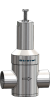
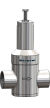
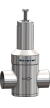
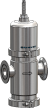
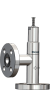
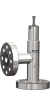
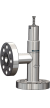
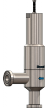
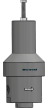
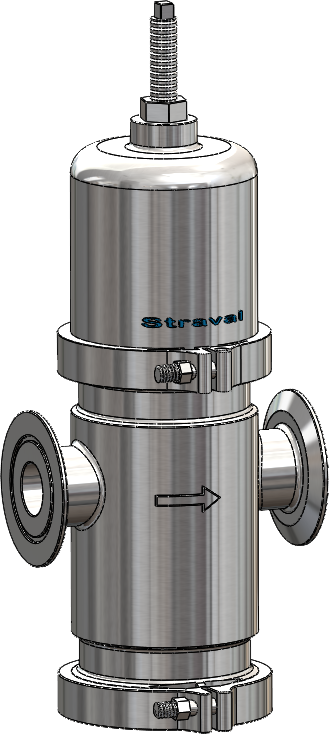
Model PRS09-TC-V  

In-Line Sanitary Pressure-Reducing Valve

See Pricing Table Below


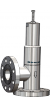
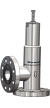
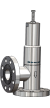
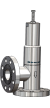
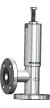
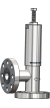
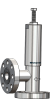
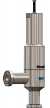
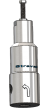
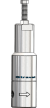
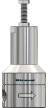
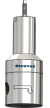
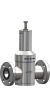
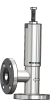
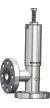
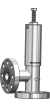
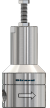
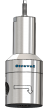
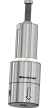
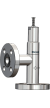
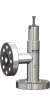
Sanitary Pressure Regulator PRS09-TC-V
  • Spring diaphragm operated
  • 1/2"-2" in-line Tri-Clamp connections
  • Inlet pressures to 150 PSI (~10 Bar)
  • Outlet pressures 8 to 80 PSI (~5.5 Bar) (multiple spring ranges) (consult factory for higher pressures)

Features

  • Body and flanges: Standard material is type 316 stainless steel.
  • Trim: 316 Stainless steel for poppet and seat is standard.
  • Internal Surface finish 20RA is standard. Electropolishing is optional
  • Teflon-Viton composite reinforced diaphragm is rated pressure of 100 PSI and minimum burst pressure of 300 PSI. Teflon film on the wetted side provides good corrosion resistance to a wide range of fluids and gases including steam. Max temperature rating is 350 °F(176 °C). Viton is the elastomeric seal on the non-wetted side.
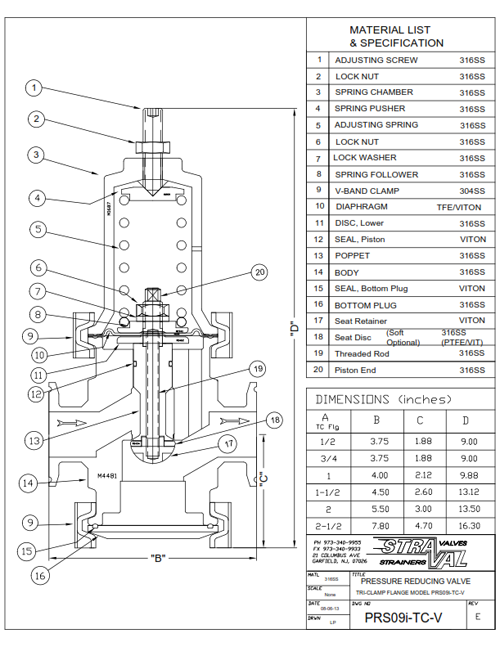
  • In-line flanges: Sanitary Tri-Clamp type is standard for this model with face-to-face dimensions as illustrated. Custom flange spacing  can also be made available. . Standard inlet flanges and outlet flanges are equal in size. Unequal flange combinations (larger outlet than inlet) are also available to compensate for expansion of gases at reduced pressures.
  • Quick Disconnect V-Band Clamp: made from 300 series SS (18Cr, 8Ni)
  • Metal or Soft seat :Several elastomer material options are options are available to suit various liquid or gas applications. See options in pricing section below
  • Top guided poppet with accurately machined body bore eliminates poppet misalignment & assures proper seating under all conditions.
  • External Spring Housing: Standard material for sanitary application is 316 series stainless steel, but  300 series stainless steel (18Cr,8Ni) can also be slected for less stringent sanitary applications, as this part is nonwetted and does not come in contact with the product flowing through the valve.

Applications

This is a direct-acting pressure-reducing valve with an adjustable spring operating against a flexible elastomeric diaphragm subjected to the reduced outlet pressure of the valve.

This valve is used for medium flow applications. See flow data below. For larger capacities  to a higher flow model can me custom made with offset flanges.

This valve can be used for many fluids, clean steam, air & gases, and various products used in the food processing and pharmaceutical industry.  Only clean, filtered, or strained solids free liquids and gases should be used for best operation of the valve. A strainer or filter, depending on the degree of contamination, should be installed before the inlet of the valve. Sanitary strainers or filters can be purchased from Stra-Val to provide some degree of protection.

Unlike unbalanced pressure-reducing valves, this valve is a balanced inlet design and will work quite well on applications where the inlet pressure will fluctuate widely and will have little effect on outlet pressure.

This valve should not be used as a shutoff valve. If the valve is expected to be dead ended ( no flow passing through the valve) for prolonged periods, pressure at the inlet should be shut off, or a relief valve installed on the outlet side of the valve in case of excessive pressure buildup, reducing the life of the diaphragm or causing possible equipment damage downstream of the valve.


Options

Select the valve size, spring range, material options in the customized pricing and ordering section indicated by the red arrows. You have the ability to customize your valve choices by selecting the wetted and nonwetted materials, choice of seat materials,  and if you would like the valve to be electropolished. Once these selections are made a price quote can be generated and printed directly to your computer or immediately e-mailed to you. 


Principle of Operation

This valve operates on the principle of balancing the spring force that is set by the user against the outlet pressure acting under the diaphragm. There is an internal pressure balancing port that subjects the outlet pressure directly to the underside of the diaphragm. When the outlet pressure falls below the set pressure required by the system on the outlet side of the valve, the spring force overcomes the force balance under the diaphragm causing the poppet and diaphragm assembly to drop down causing the valve to open and allow higher pressure at the valve inlet to pass through the valve.  When the pressure rises to a sufficient level to restore the force balance agains the spring, the valve will move toward the closed position. The valve is completely self regulating and the poppet is constantly moving  to respond  to pressure changes on the outlet side of the valve, not the inlet. The only time the poppet closes completely is when the outlet pressure has been reached to its set point. As long as the valve is able to shut off properly without solids or other material build up in the seat or because of seat wear, the valve should be able to maintain and hold the outlet pressure and keep it from rising for brief periods of time. If the valve is set with no flow passing through the system, there will be some droop (drop in outlet pressure) caused by relaxation of the spring when the valve first has to open.  This occurs with all direct spring operated valves and can be compensated by making a slight readjustment to the set pressure once the desired capacity has been achieved. 


Sanitary Pressure Regulator PRS09-TC-V
 
+ Click here for Pricing/Ordering Instructions
 
Customized Pricing & Ordering Information ($USD)

To show prices:

Click on a size:
1/2" PRS09-05TC-V 3/4" PRS09-07TC-V 1"PRS09-10TC 1 1/2"PRS09-15TC
2" PRS09-20TC-V  
 
To price or order, first select a size above.


Printable
Product Specs

CLOSE (X)
To display pricing, print or e-mail a quotation or order, you must follow these basic steps:

1.) Select one of the product groups, spring range for Valves (Perf or mesh for Strainer products)

2.) Click on a spring Range (Valves) or Perf or mesh (Strainers). Options will now appear with price adders.

3.) If your pressure units are different from the ones listed, click on the units header "?" to convert.

4.) By placing your mouse over each option you will see a pop up display with helpful information about that material or option

5.) As you click on each option, you will see the subtotal change. You must click on all available options before proceeding to the next step.

6.) Select any of the following buttons: Click Here To print, E-mail, or to Order. Now you are ready to apply your quantity and resale discount if you are an eligible reseller or OEM.

+ Click here for product-specific instructions