
Balanced vs Unbalanced Back Pressure & Relief Valves

balanced valve

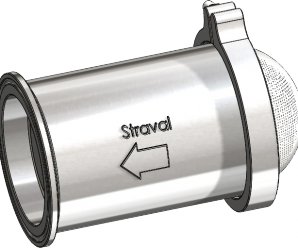
Basically the balanced models allow for a large variation in outlet pressure with little or no effect on the inlet pressure which is where the set pressure is controlled. So where large fluctuations in outlet pressure exist a balanced version should be selected or specified.

Valve performance is affected when the outlet area under the piston is greater than the seat area which sees the inlet pressure. The outlet area in a typical piston valve such as the models RVC05 & RVC05-150FLGBPS05 & BPS05-Flg,  usually the piston area is sealed to the outside with a piston seal. If this diameter is substantially larger than the seat diameter (the diameter where the piston closes off the flow to the body inlet), then there will be a noticeable unbalanced area which the outlet pressure will act on to provide additioanl lifting force on the piston.

When the valve is closed at start up and there is no system pressure (outlet pressure), only the seat area is exposed to the inlet pressure. That is exactly the condition at which the valve is set at the factory which is also at zero flow. When the valve opens, the inlet pressure exceeds the spring force ,which keeps the valve seat closed, flow immediately begins to fill the piping system which raises the outlet pressure. As long as the outlet piping discharges immediately to atmosphere with little or no system resistance to flow, the outlet pressure will only rise by a small amount caused by system resistance & turning losses caused by components such as fittings and elbows as well as piping friction. Therefore a short run of piping with few elbows and other fittings is the preferred piping system for an emergency relief valve or bypass valve because little or no back pressure is developed on the outlet side.

Why does a high outlet pressure acting on an unbalanced area affect valve performance? Very simple. When the inlet pressure to the valve falls below the set pressure, the valve normally begins to re-seat itself and closes off the inlet flow. If there is a sufficient unbalanced piston area and a relatively high outlet pressure there is a force unbalance which still keeps the piston in the open position. Remember, the spring was adjusted without this unbalanced force present. In order for the valve to close with the outlet pressure elevated, requires that the inlet pressure fall far lower than what the valve was set to. This drop in inlet pressure depends on the extent of the unbalanced area and the amount of the discharge pressure still present in the discharge piping.

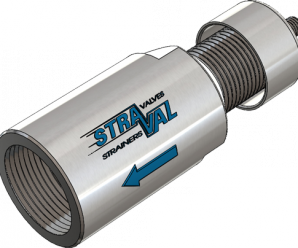
unbalanced valveIn some applications the effective lowering of the set pressure may be far below than what was intended, and may in fact keep the valve open too long, causing possible reverse flow back through the inlet of the valve, especially if the outlet is continuously pressurized. This could occur if the valve is discharging into a closed system or into an open tank that is elevated resulting in a constant head pressure.

This is why a relief valve or bypass valve ordinarily should never discharge against an elevated pressure or into a piping system that is very long and has many piping components that have the effect of raising system pressure at full flow.

Selecting an unbalanced valve where elevated discharge pressures are present, whether from external system conditions or flow related (excessive piping friction loss buildup) can result in unwanted and undesirable results. These could be unpredictable system instabilities, resulting in reverse flow, unwanted pressure pulsations, chatter and pounding ,which may even result in valve failure and possible failure in other components in the piping system.

These problems are most noticed when an unbalanced valve, usually a relief valve is misapplied in a system where a balanced back pressure  or bypass valve should be specified.

See a related Straval article (Select the proper valve type: Relief, Bypass, Back Pressure) that discusses the differences between an emergency relief valve and a bypass or back pressure valve and what effect valve sizing can have on overall system performance.

Contact Straval for help and guidance with your specific application. However, Straval cannot accept responsibility for the end use application and how its products are finally used in the customer’s piping system.

Share and Enjoy

  • Facebook
  • Twitter
  • Delicious
  • LinkedIn
  • StumbleUpon
  • Add to favorites
  • Email
  • RSS
Posted in Balanced and Unbalanced, Relief Valves | Leave a comment

Balanced vs Unbalanced Pressure Regulators

Straval manufactures several pressure regulators that are both balanced and unbalanced. This article discusses the merits and features of each type and where each should be used in your specific application.

unbalanced valveBasically the balanced models allow for a large variation in inlet pressure with little or no effect on the outlet pressure. So where large fluctuations in inlet pressure exist a balanced version would have to be selected. If an unbalanced valve is operating in an existing piping installation and the inlet pressure were to change over a period of time, a manual adjustment could be made to reset the original set pressure to compensate for a significant change in inlet pressure. An occasional drift in set pressure may be acceptable in some instances, but where a fairly constant outlet pressure is required and where frequent adjustments are not practical, selecting a balanced design would be the preferred choice .
The balanced pressure regulator valves are models PRS09iPRS09i-P, and PRS09-TC-V in the low pressure group, and PRH-04, PRH09 in the high pressure group.

When a valve has a comparable Cv, the unbalanced designs such as the PRS05, PRS06, and PRS11 do have advantages over the balanced design and that is these models can operate at much smaller pressure differences between the inlet and outlet pressures. The reason for this is the additional sliding friction that piston seal introduces in the balanced models does not exist in the unbalanced models. Therefore the unbalanced valves can operate more accurately in a smaller pressure range between inlet and outlet pressure.balanced valve

Sometimes an unbalanced model is selected because the porting arrangement  may be more favorable (angle pattern vs in-line) than a balanced model and is sometimes also less costly. In addition the flow curve for one model may be more favorable for one type of valve compared to another. So that also needs to be weighed in the overall application criteria. However, generally overall performance of the valve should dictate the final valve selection in favor of the piping layout when the installation allows it.

Contact Straval for help with your specific application.

However, Straval cannot accept responsibility for the end use application and how its products are finally used in the customer’s piping system.

Share and Enjoy

  • Facebook
  • Twitter
  • Delicious
  • LinkedIn
  • StumbleUpon
  • Add to favorites
  • Email
  • RSS
Posted in Balanced and Unbalanced, Pressure Regulators | Leave a comment